How Digital Wallets Are Shaping Real-Time Payment Strategies in the UAE
Aani gives the UAE a three-second rail. Wallets decide what people do with it: proxy addressing, request-to-pay, pay-by-bank funding and instant refunds are becoming the strategy, not the add-ons.
In this article
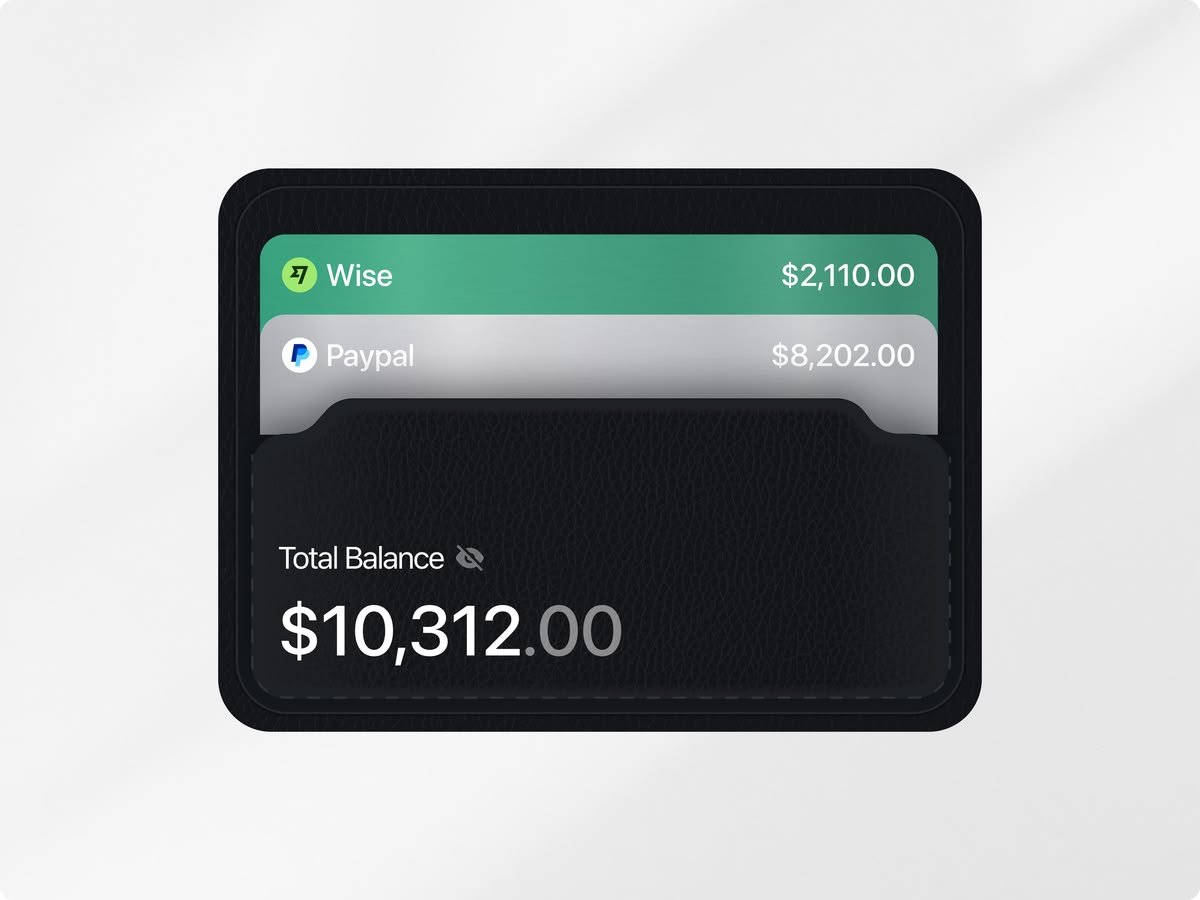
For most of the last decade the UAE's payment story was told in cards. Contactless terminals spread, card-on-file became the default online, and the question for a merchant or a regulated financial institution was which acquirer to use. That framing is now out of date. The country has a national instant rail that settles in seconds, and a crowded layer of digital wallets sitting on top of it. Together they are changing what a real-time payment strategy has to contain.
The rail is Aani, operated by Al Etihad Payments under the Central Bank of the UAE. The wallet layer is everything from Apple Pay and Google Pay to telco wallets, super-app wallets and a new wave of licensed stored-value accounts. The strategic point is simple: the rail decides how fast money can move, but the wallet decides what people actually do with that speed. Institutions that plan for the rail alone will find the wallet layer has already set customer expectations for them.
The rail underneath the wallet
Aani's growth gives the clearest picture of how quickly behaviour has shifted. In April 2026 Al Etihad Payments reported that registered users had passed 12.5 million, connected through 74 licensed financial institutions, with transfers up sixfold year on year and average monthly growth of 10% through 2025. Around 25,000 transfers a day were being made using nothing more than a mobile number, and roughly 774,000 merchants had adopted the platform, with account-to-account payments completing in no more than three seconds.
By the time of writing, Al Etihad Payments' own figures panel shows 14.65 million enrolled users, 875,000 enrolled merchants and 78 active licensed financial institutions, with a per-transaction limit of AED 50,000. The Central Bank's Financial Stability Report, as compiled by Adjoltz, puts the number of Aani transactions in 2025 at around 183% above 2024, while the older Immediate Payment Instruction rail fell from 67.5 million transactions to 33.8 million as traffic migrated to the new platform.
Two design choices matter more than the headline numbers. First, Aani addresses payments by proxy: a mobile number, an email address, an Emirates ID or a QR code, not an IBAN. Second, it is built around Request to Pay, QR acceptance and the ability to manage accounts from several institutions and wallets inside a single app. Those are wallet features baked into the rail, and they are the reason wallets and instant payments in the UAE cannot be planned separately.
What the wallet layer looks like now
Fintech News UAE's mid-2026 review of the market names Careem Pay, e& money, Payit, Botim and Ziina as the wallets competing hardest for everyday transaction volume, and describes a clear trend toward consolidation: consumers are migrating to apps that combine messaging, transport or telecoms with financial services. The wallet is no longer a standalone payment app. It is a feature inside something people already open several times a day.
The licensing data points the same way. Adjoltz, citing the Central Bank's 2025 annual report, counts 16 stored-value facility licences and 30 retail payment service provider and card scheme licences issued in 2025 alone. The most visible result arrived in September 2026, when Tabby opened its Tabby Cash account to all UAE residents under a stored-value licence and passed one million accounts within two months. Its pitch is instructive: no account or card fees, refunds that land the moment a retailer approves them, and bills that can be split into up to twelve instalments. Speed and flexibility are the product.
Consumers are ready for this. A SixthFactor survey of 1,050 UAE residents, conducted in spring 2026, found that 70.7% had become more willing to pay with digital wallets such as Apple Pay, Google Pay and Samsung Wallet than with cash or physical cards. Dubai's own cashless index reached 90.1% in October 2026, beating the target set for the end of the year, with government cashless collections at 99.66% in the first half of 2026.
The rail decides how fast money can move. The wallet decides what people do with that speed.
Four ways wallets are rewriting real-time strategy
1. Addressing has moved from the account to the person
When 25,000 transfers a day are initiated with a phone number, IBAN collection stops being a reasonable step in any customer journey. Payout flows, refunds, marketplace settlements and peer transfers all need to resolve a proxy to an account in real time. That is an integration and data-quality problem, not a user-interface one, and it is now table stakes.
2. Request to Pay turns the wallet into the acceptance device
With QR and Request to Pay native to the rail, a merchant can be paid account-to-account without a card terminal, and a biller can present a request inside the customer's wallet rather than chasing a transfer. For any institution serving merchants, the acceptance strategy now has three legs: cards, the domestic Jaywan scheme, and instant account-to-account via wallets.
3. Funding is going account-to-account, and it is going one-tap
In June 2026 Ziina and Lean Technologies launched a one-tap pay-by-bank top-up built on open finance, letting a user link a bank account once instead of authorising every top-up individually. Pay-by-bank had existed in the UAE only as single, separately authorised payments; recurring, low-effort funding changes the economics of a wallet and reduces its dependence on card rails for loading money.
4. Speed is now a product feature, not a back-office metric
Tabby's comparison is blunt: refunds to its account arrive on retailer approval, while card refunds typically take three to ten working days. Once one provider makes instant the norm, every other provider's settlement timetable becomes visible to the customer. Real-time rails were sold as efficiency. In the wallet era they are sold as experience.
Where the picture is uneven
None of this means cards are finished. EZDubai and Euromonitor data compiled by Adjoltz shows 87% of UAE online shoppers still paid by card in 2025, with 67% using cash on delivery and 52% a digital wallet. Shoppers use several methods, and the wallet share is rising while the card share slips, but a strategy that drops cards is premature.
Adoption is also unequal. In the SixthFactor survey, willingness to use wallets was 75.5% among households earning AED 30,000 or more a month but 59.1% among those earning under AED 10,000, a 16.4-point gap. Education showed the same pattern. The segments where wallet use is lowest are exactly the segments where account-based wallets with virtual IBANs, such as Botim's offering for blue-collar workers, are now being aimed. That is where the next phase of growth will come from, and where inclusion and commercial opportunity line up.
A playbook for institutions and merchants
- Treat Aani as a channel, not a compliance item. Map every flow that moves money to a person, from salary advances to refunds, and ask which of them should settle in seconds by proxy today.
- Design acceptance in three legs. Cards, Jaywan and account-to-account via wallet each have different costs, chargeback rules and data. Price and route them deliberately rather than letting the acquirer decide.
- Make Request to Pay a product. Billers, subscription businesses and marketplaces can replace reminders and chasing with a request that lands in the customer's wallet.
- Fund wallets from accounts, not just cards. One-tap pay-by-bank via open finance lowers loading cost and removes a dependency on card networks for top-ups.
- Publish your settlement promise. If refunds or payouts take days, say so, then shorten it. Customers now benchmark against providers that settle instantly.
- Build for the proxy, not the IBAN. Clean phone and email data, resolution logic and fallbacks when a proxy is not registered will decide whether instant flows actually work.
- Plan for the underserved segment. The income and education gaps in wallet adoption are the growth map. Virtual IBANs, fee-free accounts and remittance-friendly features are the entry points.
The bottom line
The UAE now has the two things a real-time payments market needs: a national instant rail with proxy addressing and Request to Pay, and a wallet layer that puts those capabilities in front of millions of people every day. For regulated financial institutions and fintechs the strategic question has moved on from whether to connect to the rail. It is whether the wallet experiences customers already use, and the expectations they have set around speed, funding and refunds, are reflected in the products being built on top of it.
- Aani Delivers a Transformational Leap in the UAE's Digital Payments Landscape: 12.5 Million Users and Instant Transfers in 3 Seconds — Al Etihad Payments, April 2026
- About Aani (live figures panel) — Al Etihad Payments, accessed November 2026
- UAE Digital Payments Statistics 2026: Cards, Aani, Wallets, BNPL & Cash — Adjoltz, October 2026 (compiling CBUAE, EZDubai/Euromonitor)
- Top 5 Digital Wallets in the UAE 2026: Who is Winning the Consumer? — Fintech News UAE, June 2026
- UAE Digital Wallet Adoption: 70% Prefer Mobile Over Cash — Fintech News UAE / SixthFactor, June 2026
- Lean Technologies and Ziina Launch One-Tap Pay by Bank in the UAE — Fintech News UAE, June 2026
- Tabby Cash Hits 1 Million UAE Accounts After September Rollout — Fintech News UAE, November 2026
- Dubai Finance: Dubai Cashless Strategy exceeds its 2026 targets — Government of Dubai Media Office, October 2026
- The UAE's Domestic Payment Scheme Takes Shape — PaymentsJournal, July 2026
Ripae helps regulated financial institutions and fintechs design, build and modernise payment systems, from real-time rails and wallets to cross-border flows.