Why Payment Fraud Is a Growing Problem for SaaS Firms in the UAE
Card testing on small charges, farmed free trials and friendly-fraud disputes all land hardest on subscription businesses, and the UAE adds rising scams, real-time rails and new authentication rules.
In this article
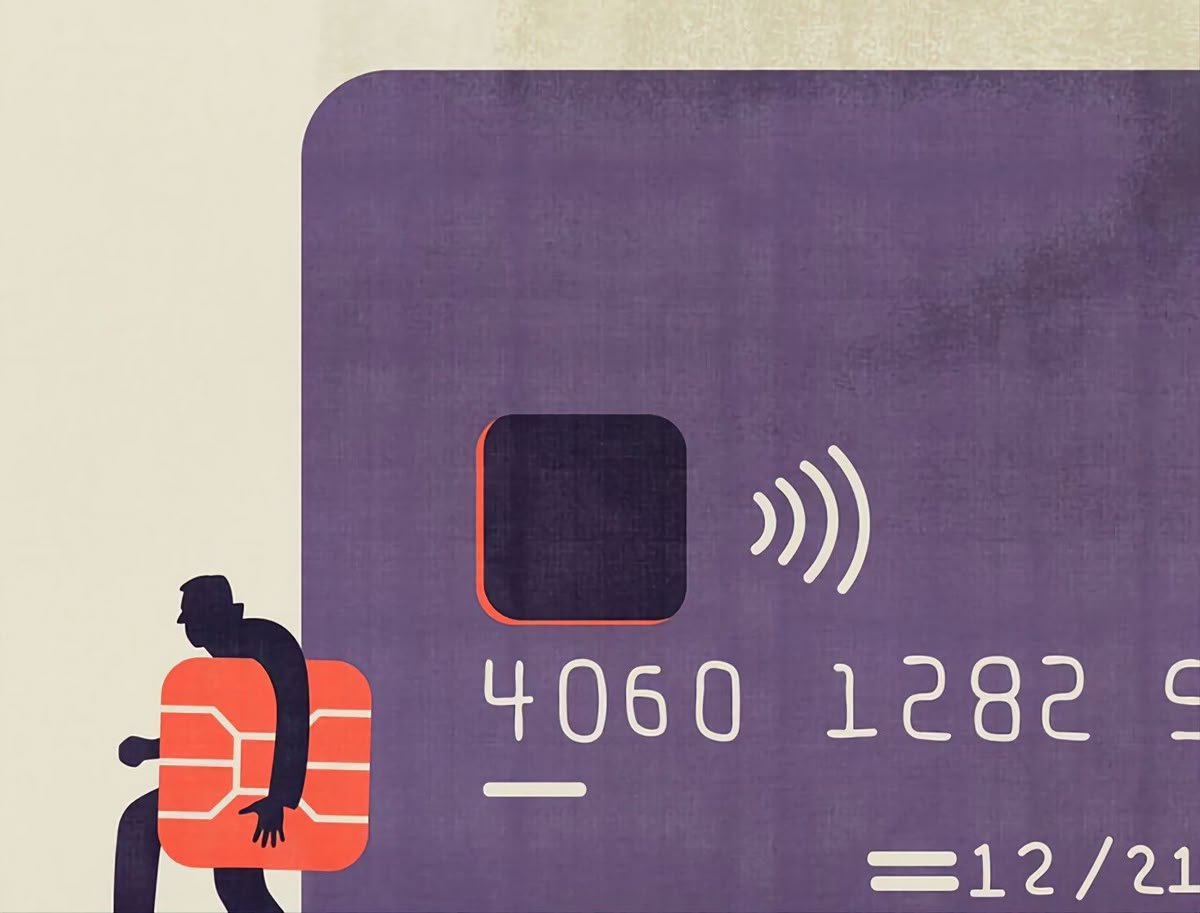
Software companies used to treat payment fraud as a retailer's problem. Nobody steals a subscription the way they steal a television, the reasoning went, so a card processor's default rules were enough. That reasoning no longer holds, in the UAE or anywhere else. SaaS businesses now sit at the intersection of the three fastest-growing fraud patterns: card testing on cheap sign-up charges, abuse of free trials and new-account perks, and so-called friendly fraud, where a real customer disputes a charge they actually made.
The UAE adds its own pressures. Consumers are being targeted heavily, real-time rails have opened new routes for fraudsters, and authentication rules are changing under merchants' feet. There is no public dataset that measures fraud at UAE software companies specifically, so this piece reads the local fraud picture alongside network-level data on subscription businesses. Read together, the direction is clear.
The UAE fraud backdrop
Visa's 2026 Stay Secure study, conducted by Wakefield Research and published in June, found that 46% of UAE consumers had experienced a financial scam in the previous 12 months. Of those, 38% said it happened on social media, more than on websites, marketplaces or shopping apps. Only 19% believe consumers should be primarily responsible for protecting themselves online. The rest look to financial institutions, regulators and payment providers to carry that weight.
Institutions are feeling it. In an April 2026 survey of fraud, anti-money-laundering and compliance leaders at UAE banks commissioned by BioCatch, 58% reported rising fraud losses and 62% estimated annual losses above AED 18.3 million. BioCatch's Director of Global Fraud Intelligence tied part of the rise to the spread of real-time payments, which have created new opportunities for fraudsters, and singled out social-media micro-scams as a growing pain point. Nearly all respondents, 95%, called those micro-scams a detection and reporting challenge.
The regulator has responded at the authentication layer. The Central Bank of the UAE directed licensed financial institutions to phase out SMS and email one-time passwords in favour of risk-based methods such as Emirates Face Recognition, soft tokens and biometrics, with real-time fraud monitoring and session suspension when malicious activity is detected. BankInfoSecurity reported the compliance deadline as March 2026, and noted the directive arrived as scams and fraud in the UAE were growing by 43% a year.
Why software businesses are exposed
Card testing hides in small charges
Most SaaS checkouts take a card, run a small authorisation or a low first charge, and grant access instantly. That is exactly what a fraudster needs to check whether stolen card numbers are live. Visa's own guidance notes that card-not-present fraud is now 7.5 times more likely than fraud at a physical point of sale and accounts for nearly 90% of card fraud losses. For a merchant, card testing shows up as bursts of tiny approvals and declines, followed by chargebacks and processor penalties, even when no customer data was taken from its own systems.
Free trials have become an attack surface
Stripe reported that between November 2025 and February 2026 its models detected 6.2 times more abusive free trials across its network. It found that 7.4% of sign-ups at AI companies were implicated in suspected multi-account abuse, where one person spins up many accounts to farm trials, credits or tokens. AI start-ups offering self-serve trials and direct API access saw ten times more attempted abuse than enterprise AI products. When every request burns compute, a fake account is not a rounding error. It is a direct cost.
The old defence has also stopped working. Businesses used to block virtual cards at sign-up, but Stripe notes that many customers now use virtual cards legitimately for privacy and security. Blocking them wholesale rejects good customers along with bad ones.
Friendly fraud lands hardest on subscriptions
The 2026 Chargeback Field Report from Chargebacks911, based on a survey of more than 250 merchants, found that 83.4% of enterprise merchants saw friendly fraud rise in 2026 and 62% now rate refund abuse as a moderate or significant concern. More than 32% identified subscription billing as a chargeback risk factor. Yet only about half knew exactly how their billing descriptor appears on a customer's statement, which is the single most common reason a legitimate renewal gets disputed as unrecognised.
Stripe puts the cost of managing first-party disputes at $35 for every $100 disputed. Visa estimates that around a fifth of chargebacks stem from first-party misuse, at an average cost to merchants of $78 per case. For a subscription business with thin per-account margins, those numbers decide whether a customer segment is profitable.
In a subscription business, the fraud that hurts most is often committed by someone with a real card and a real account.
What is changing in the UAE checkout
Two shifts matter for software companies selling into the UAE. First, the move away from SMS one-time passwords pushes card authentication toward app-based approval and biometrics. That is stronger, but it changes how step-up challenges appear to a customer at checkout and how often a payment fails mid-flow. Recurring and merchant-initiated charges need to be flagged correctly so renewals are not challenged needlessly.
Second, account-to-account payments are becoming a credible way to pay for software. Instant rails remove chargebacks as they exist on cards, but they shift the risk toward authorised push-payment scams and mule accounts, which is exactly the pattern UAE bank leaders flagged. A SaaS firm adding pay-by-bank is not leaving fraud behind. It is trading one fraud profile for another, and needs controls for both.
A practical playbook for UAE SaaS teams
- Price the trial as a risk decision. Decide where the card is collected, how much value a new account unlocks before any payment signal arrives, and what an abusive account actually costs you in compute and support.
- Watch sign-up, not just payment. Multi-account abuse is visible at registration: shared devices, payment fingerprints reused across many emails, and disposable addresses. Score accounts before they consume anything expensive.
- Rate-limit and monitor small authorisations. Card testing looks like volume, not value. Velocity limits on low-value attempts, plus alerts on decline spikes, catch it early.
- Fix your billing descriptor. Make sure the statement shows a name and support contact a customer will recognise, and send renewal reminders before charging. This alone removes a large share of unrecognised-transaction disputes.
- Make refunds easier than chargebacks. Customers who cannot find a cancel button call their card issuer. Self-serve cancellation and fast refunds are fraud controls as much as service features.
- Tag recurring charges correctly. As UAE authentication moves to app-based approval, correct merchant-initiated and recurring flags keep renewals out of unnecessary step-up challenges.
- Plan controls for every rail you add. If you introduce pay-by-bank or wallets, add payee verification, behavioural signals and mule detection alongside your card defences.
The bottom line
Payment fraud is a growing problem for UAE software companies because each of the forces behind it is growing too. Consumers are being targeted at scale, real-time rails are opening new routes, and the subscription model itself, with its trials, small charges and recurring renewals, gives attackers and abusive customers repeated chances. The firms that cope best will treat fraud as part of product design: who gets access, when value is unlocked, how a charge appears and how easily a customer can leave.
- Visa Study: 85% in UAE Use AI to Shop, But Trust is Key at Checkout (Stay Secure 2026) — Visa, June 2026
- Nearly 60% of UAE banking leaders report increasing fraud losses — BioCatch, April 2026
- UAE Central Bank Tells FIs to Drop SMS, OTP Authentication — BankInfoSecurity, June 2025
- Analyzing first-party fraud trends: Account, free trial, and refund abuse — Stripe, 2026
- 2026 Chargeback Field Report — Chargebacks911, 2026
- Guide to detecting and preventing payment fraud — Visa
- Credit Card Fraud Statistics 2026: CNP and E-commerce — DeepStrike, 2026 (compiling Nilson, EBA/ECB)
Ripae helps regulated financial institutions and fintechs design, build and modernise payment systems, from real-time rails and wallets to cross-border flows.